You don’t have a storage problem. You have a sorting problem.
We’ve all been there. You walk into Target for one thing and somehow leave with a cart full of bins, baskets, drawer organizers, and a renewed belief that this is finally going to fix everything.
You get home, fill everything up, admire it for five minutes, and then two weeks later the space feels just as cluttered as before.
Here’s what I’ve learned from working in people’s homes: buying containers before you’ve sorted through what you own almost always makes the problem worse, not better. You end up organizing clutter instead of clearing it out, and that is a cycle that never ends.
Before you spend another dollar on storage, do these things first.
This post may contain affiliate links, which means I may earn a small commission if you purchase through them, at no extra cost to you. I only share products I actually use, recommend, or would use in real homes.
1. Take Everything Out First
I know it sounds like the most obvious advice in the world, but most people skip this step.
They try to organize around what is already there, which means the things that don’t belong, the expired products, the duplicates, and the “I’ll deal with this later” items stay hidden. They just get shuffled around into a prettier mess.
Pull everything out. Put it on a table, on the floor, or wherever you have space. You can’t make good decisions about what to keep or how to store it until you can actually see what you own.
This is the part that can feel messy before it feels better, but it matters.
2. Sort Before You Size
This is where people get into trouble.
They buy bins first, then try to make their stuff fit into them. It should be the other way around.
Once everything is out, group similar items together. Snacks with snacks. Batteries with batteries. Cleaning supplies with cleaning supplies. Seasonal items with seasonal items.
Once you know what you actually have, and how much of it, you’ll know what size containers you need, how many you need, and whether you even need them at all.
Sorting first also makes it much easier to spot duplicates. Most people find at least a few things they forgot they owned, bought again, and now somehow have three of. It happens. We are all one “backup” purchase away from chaos.
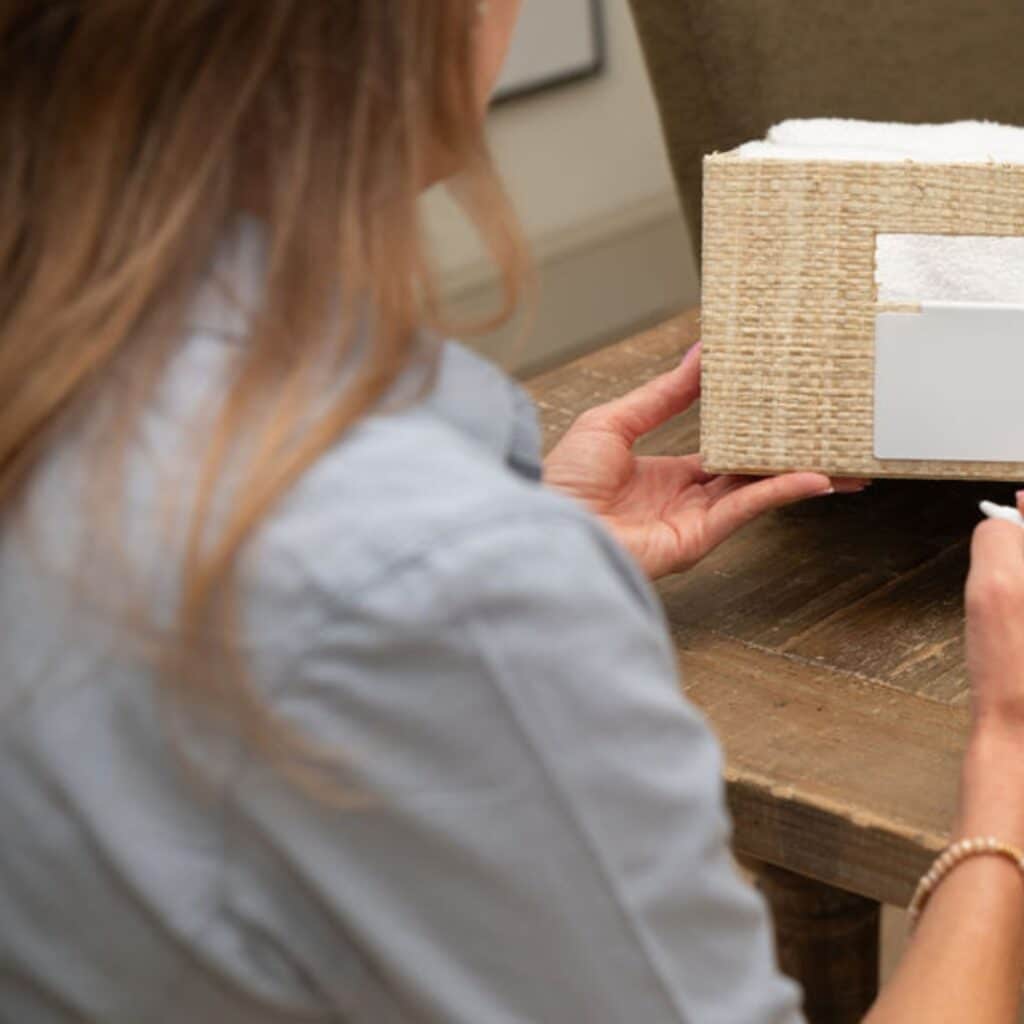
3. Decide What Stays
This step feels harder than it is.
You don’t have to be ruthless, and this is not about throwing everything away. It’s just about being honest.
Ask yourself:
- Do I use this?
- Does it belong in this space?
- Is it expired, broken, damaged, or something I’ve been keeping out of guilt?
- Would I buy this again today?
The things that don’t make the cut do not deserve a bin.
Giving clutter a cute container does not solve the problem. It just gives the problem a lid.
4. Measure Your Space, Not Just Your Stuff
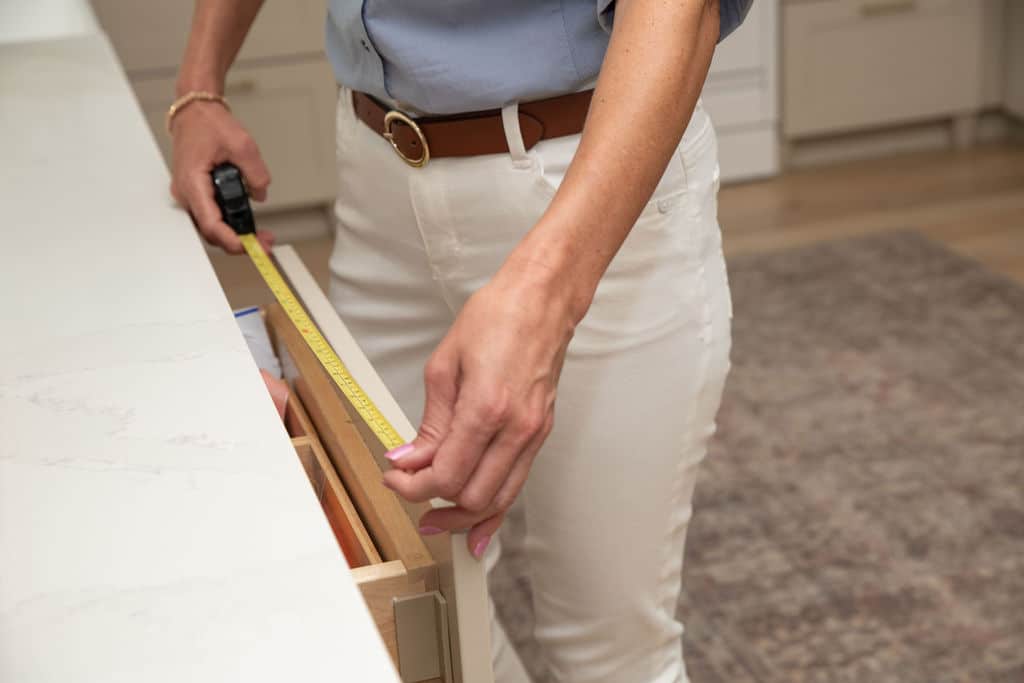
Before you add anything new to a shelf, drawer, closet, or cabinet, measure the space.
This sounds obvious, but it gets skipped constantly. Bins that are a quarter inch too tall, too deep, or too wide are incredibly frustrating and a waste of money.
Measure the width, depth, and height of your shelves, drawers, or cabinet interiors before you shop. If you’re buying online, check the measurements twice.
Pretty is nice. Pretty that does not fit is just a return waiting to happen.
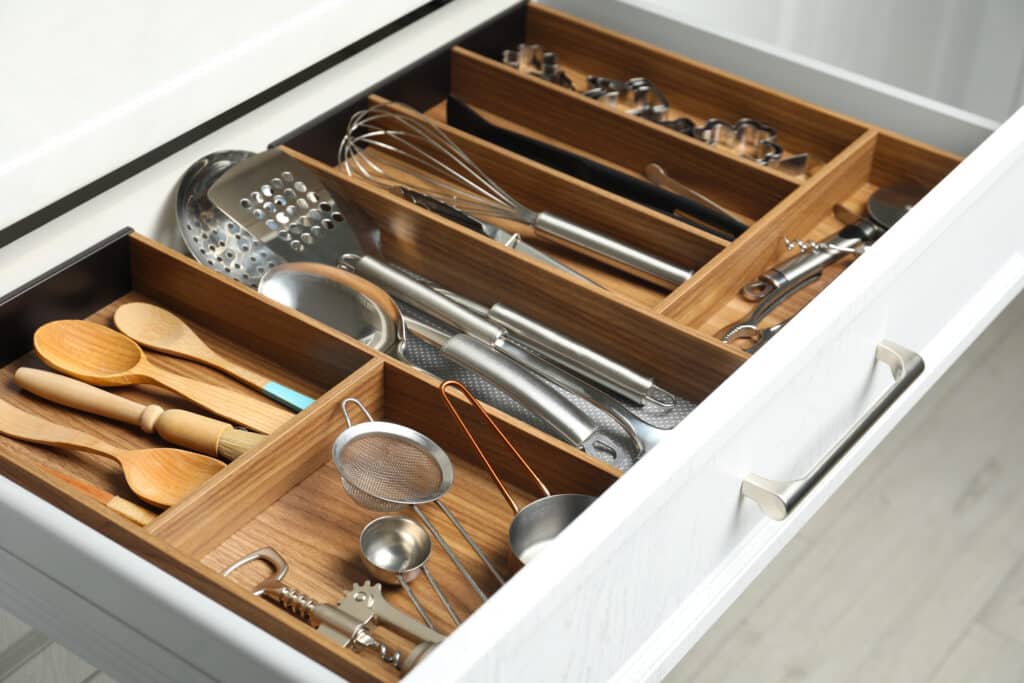
A set of stackable bins or drawer organizers that actually fits the space can make a huge difference in how functional everything feels day to day.
5. Now Buy the Bins, But Only What You Need
Once you know what you’re keeping, how it’s grouped, and how much space you’re working with, shopping becomes simple.
You are not guessing anymore.
Buy for function first. Clear containers are often the better choice because you can see what’s inside without digging. They can be especially helpful for busy families, people with ADHD, older adults, or anyone who does better when things are visible and easy to grab.
A few products I reach for often in client spaces are clear storage bins for pantries and cabinets, drawer organizers for junk drawers and bathroom vanities, turntables for easy access in deep shelves and cabinets, open storage bins for spaces where you want to grab and go quickly, and simple labels to help everyone know where things belong.
The Bottom Line
The bin aisle will always be there. Promise.
And honestly, once you’ve done the sorting work first, shopping for containers becomes the fun part instead of the panic part. You’ll spend less, buy pieces that actually fit, and end up with a system that makes sense for your real life.
If you’ve been buying bins, baskets, and organizers but your home still feels cluttered, this is probably why. Start with what you already own before adding anything new. It sounds simple because it is, but it is also the step most people skip.
Have questions or need some help figuring out where to start? Reach out here.