This post may contain affiliate links, which means I may earn a small commission at no additional cost to you if you make a purchase through one of my links.
There is something about the weeks before the holidays that makes clutter feel a little louder. The kitchen is busier, packages start arriving, decorations come out of storage, and suddenly every surface seems to have something sitting on it.
But getting your home ready for the holidays does not mean you need to organize your entire house.
In fact, please don’t.
Instead, focus on the spaces that will make the biggest difference in how your home functions over the next few months. If you’re hosting, that might be your entryway, kitchen, bathroom, and guest spaces. If you’re not hosting, choose the areas that tend to become more cluttered when life gets busy.
This list is meant to give you a place to start, not 25 things you need to accomplish this weekend.
Want something you can check off as you go?
Download the Free 25 Things to Declutter Before the Holidays Checklist
Entryway and Drop Zones
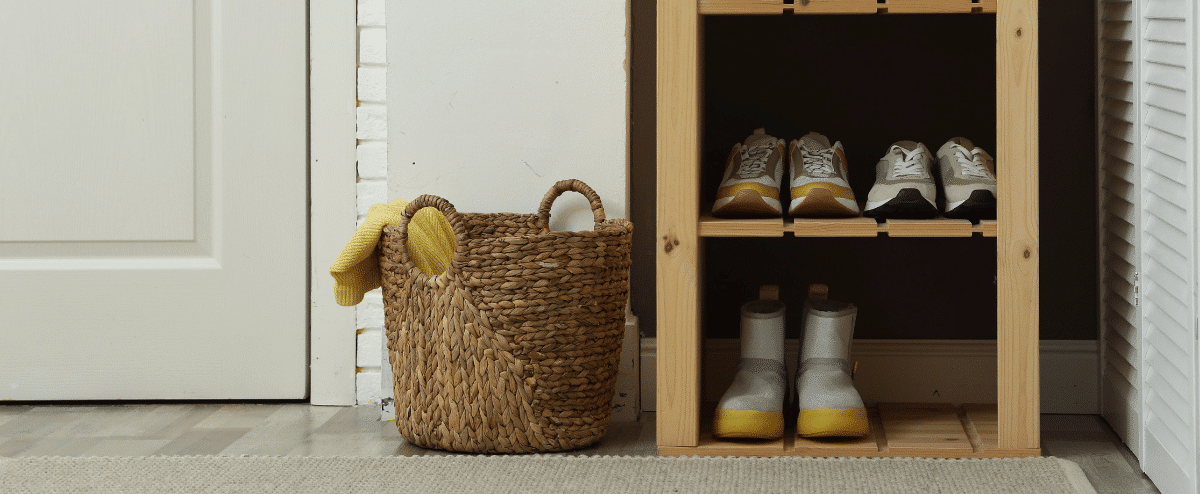
1. Entryway
Start with what has collected near the door: shoes, bags, mail, returns, and all those things that were put down “just for a minute.”
Keep the things your household uses regularly within easy reach and relocate anything that doesn’t need to live there.
If keys, sunglasses, and other small items tend to scatter across the surface, a small tray or catchall bowl gives them an easy home without adding another complicated organizing system.
Shop catchall trays and bowls I recommend
2. Coat Closet
Before holiday guests start adding their coats to the mix, make some breathing room.
Remove coats that no longer fit, aren’t worn, or don’t belong to the current season. Then look at what else has migrated into the closet and decide whether it really belongs there.
If you’re seriously short on storage, an over the door organizer can help in some spaces, but I wouldn’t add one automatically. First see what you can remove or relocate. Adding more storage isn’t always the answer to an overcrowded closet.
3. Shoes
You don’t need every pair of shoes your family owns sitting near the front door.
Move occasional and out of season shoes elsewhere, and let go of pairs that are worn out or no longer fit.
If shoes are constantly ending up in a pile, that’s when storage can help. Depending on your space, a simple shoe rack or slim shoe bins can give everyone a defined place for the pairs they use most.
Kitchen
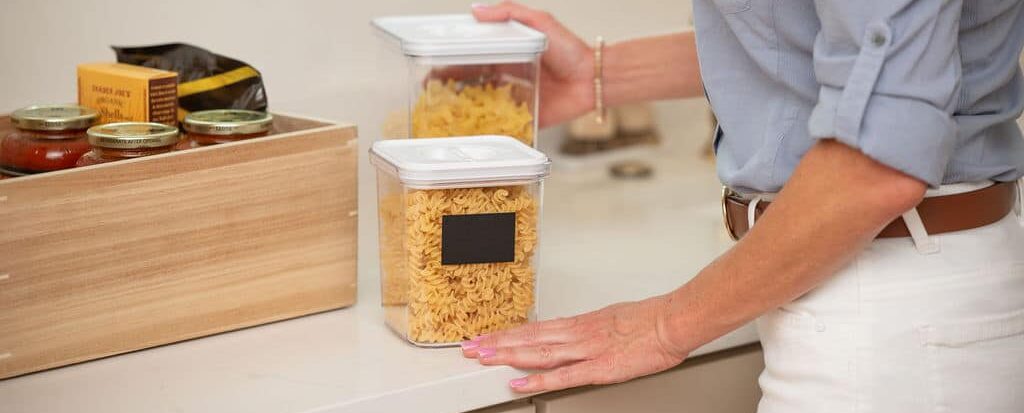
The kitchen usually works harder during the holidays, which makes this one of the best places to focus your decluttering time.
4. Kitchen Counters
Look at what is currently taking up counter space.
Do you use it regularly enough to earn that spot?
Relocate rarely used appliances, paperwork, extra decor, and anything else that has slowly made the counter its permanent home. The goal isn’t an empty kitchen. It’s enough open workspace to cook, bake, and set things down without having to move five other things first.
5. Junk Drawer
This can be one of the quickest wins in the house.
Toss dried out pens, old receipts, expired coupons, and obvious trash. Relocate things that belong somewhere else, then group what’s left.
If everything slides back together every time you open the drawer, small organizer trays or adjustable dividers can help give each category its own space.
Shop my favorite drawer organizers
6. Pantry
Before buying ingredients for holiday meals and baking, find out what you already have.
Check dates, remove food your family isn’t going to eat, and group similar items together so you can actually see your inventory.
You don’t need matching containers for everything. Start with categories first.
If your shelves are deep and smaller items constantly disappear in the back, clear handled bins can make categories easier to pull out and see. A turntable can also work well for bottles, oils, sauces, or other smaller items that are difficult to reach.
Shop pantry bins and turntables I recommend
7. Refrigerator
A crowded refrigerator gets even harder to manage once holiday food and leftovers arrive.
Clear out expired food, old leftovers, and condiments no one is using. Give the shelves a quick wipe while you’re there.
You don’t need an elaborate refrigerator organizing system. Creating enough room to easily see and access your food is the priority.
8. Freezer
The mystery package at the bottom of the freezer that no one can identify? This is its moment.
Remove anything freezer burned, expired, or unlikely to be eaten and group the rest into categories.
For a chest freezer, I prefer open top bins with handles that allow you to lift out an entire category when you need something underneath. Avoid creating stacks that require you to move multiple containers every time you need something from the bottom.
9. Kitchen Cabinets
You do not need to empty every cabinet in your kitchen.
Choose the cabinets that are difficult to use and work through them one at a time. Look for duplicates, chipped dishes, food storage pieces without matches, and gadgets you realistically don’t use.
Keep frequently used items easiest to reach and move occasional items higher or farther back.
10. Food Storage Containers
Match your containers with their lids and let go of pieces that are warped, badly stained, damaged, or missing their match.
Then choose one defined area for the category instead of letting containers and lids spread into multiple cabinets.
Before buying another set, organize what you already own. You may discover you have plenty.
Bathrooms and Linens
11. Bathroom Cabinets
Bathroom cabinets can quietly fill with half used products, samples, backups, and things we tried once and never touched again.
Work through one drawer, cabinet, or category at a time. Remove expired or unusable products and group what remains by how you use it.
Under a deep sink, handled bins can be especially useful because you can pull out an entire category rather than reaching around plumbing and knocking over everything in front of it.
Shop bathroom and under sink organizers I recommend
12. Medicine and Toiletries
Check medications and first aid supplies for expiration dates and safely dispose of anything that should no longer be used.
Then group similar items together so you aren’t searching through vitamins, toiletries, and cold medicine when someone needs a bandage.
If children will be visiting during the holidays, make sure medications and other potentially unsafe products are stored securely and out of reach.
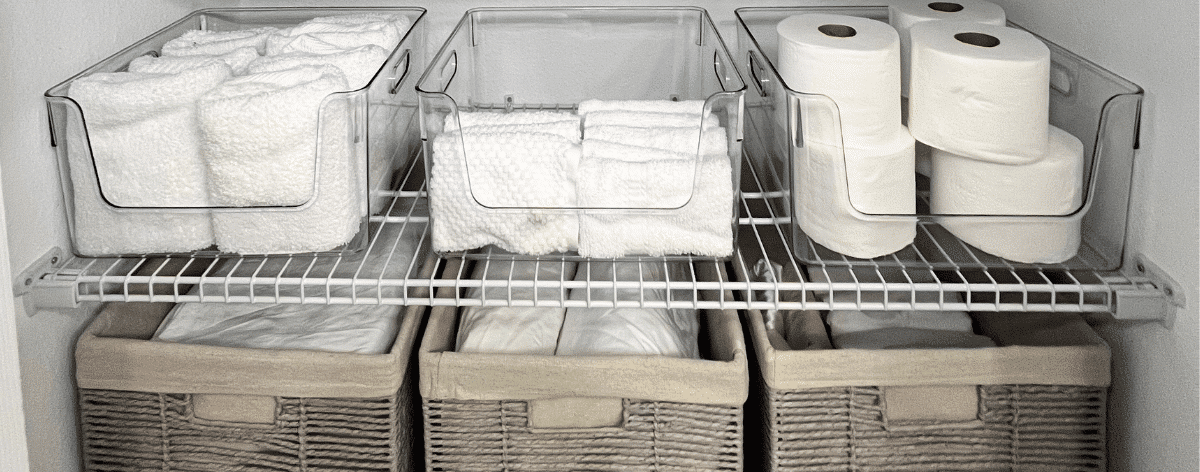
13. Linen Closet
You probably don’t need as many towels and sheets as your linen closet is currently trying to hold.
Pull out anything badly worn, stained, or no longer used. Then group linens by type, size, or bedroom, whichever makes the most sense for your household.
If tall stacks of towels or linens constantly fall into each other, shelf dividers can help create some structure without putting everything into another container.
Shop linen closet shelf dividers
If guests are coming, put their towels and linens somewhere easy to grab before they arrive.
Bedrooms and Closets
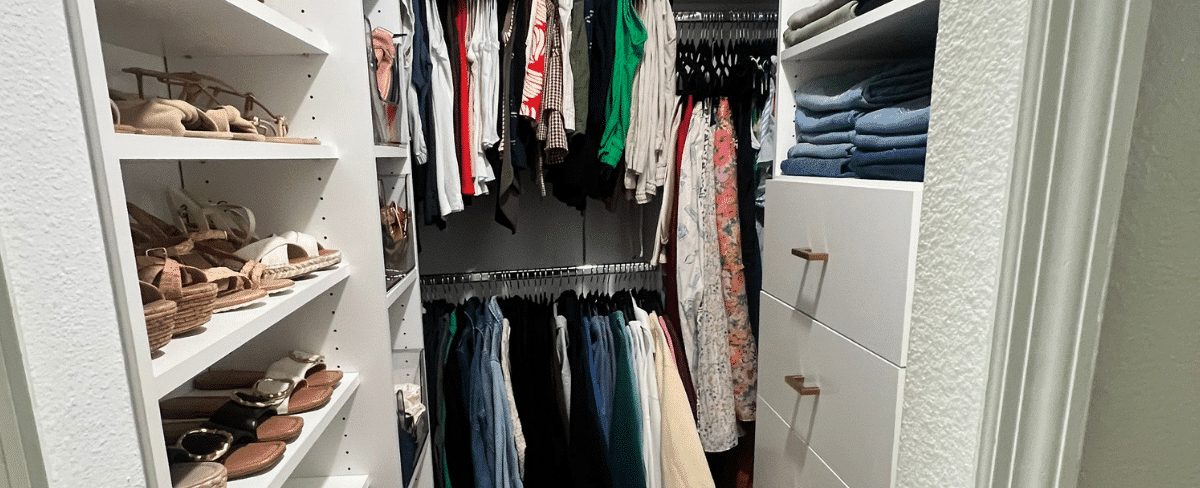
14. Bedroom Closet
Don’t feel like you need to pull your entire closet apart.
Start with one category: shirts, pants, shoes, handbags, or whatever is causing the biggest problem.
Set aside clothing that doesn’t fit, is damaged, or that you continually pass over. And don’t get caught up in arbitrary rules about how long it’s been since you wore something. The better question is whether you use it, need it, or intentionally want to keep it.
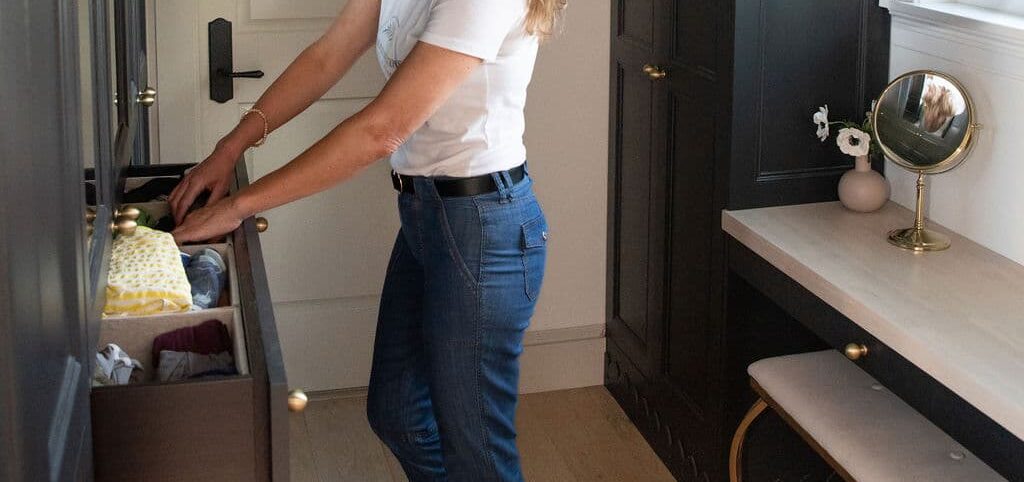
15. Dresser Drawers
If opening a drawer requires pushing everything down with one hand while closing it with the other, the drawer is telling you something.
Work through one drawer at a time and remove clothing that no longer fits, is damaged, or isn’t being worn.
Deep dresser drawers are one place where dividers can genuinely make a difference. They create boundaries between categories so everything doesn’t slowly migrate back into one big pile.
Shop the drawer dividers I recommend
16. Kids’ Clothing
Kids outgrow clothes quickly, so this is an easy category to accumulate without realizing it.
Remove clothing that is too small or too worn to use. If you’re saving clothes for another child, give those items a clearly labeled storage space instead of letting multiple sizes live together in the current closet.
A small “outgrown” bin can also give you somewhere to put things as you notice them.
17. Kids’ Toys
The weeks before the holidays are a particularly good time to look at toys because there’s a decent chance more are coming.
Remove broken toys and things with missing essential pieces. Then identify toys your children have genuinely outgrown.
Group what remains into simple categories that make sense to your child. The easier the system is for them to understand, the better chance they have of helping maintain it.
Household Clutter
18. Paper and Mail
Gather the paper that has accumulated on counters, desks, and other surfaces.
Recycle junk mail and paperwork you no longer need, shred anything containing sensitive information, and separate papers that require action from those that need to be filed.
The long term goal is simple: give incoming paper somewhere to go besides the kitchen counter.
19. Laundry Room
Laundry rooms have an impressive ability to become storage rooms for things that have absolutely nothing to do with laundry.
Clear the surfaces first. Then go through detergent, stain treatments, cleaning supplies, and anything else stored there.
Group products by purpose and avoid buying more simply because you couldn’t see the bottle hiding behind the other two.
20. Cleaning Supplies
Before holiday cleaning begins, take inventory of what you already have.
Gather duplicates, safely dispose of products you no longer use, and group the remaining supplies in a way that fits how you clean.
If you regularly use the same products in several rooms, a handled cleaning caddy can be genuinely useful. Instead of storing duplicates everywhere, you can grab what you need and carry it with you.
Shop the cleaning caddy I recommend
Holiday and Storage Spaces
21. Garage or Utility Storage
Please don’t decide you’re going to “organize the garage” on Saturday morning. That’s how perfectly nice weekends get ruined.
Choose one section instead.
Start with the area you need to access for holiday decorations or the spot that has become the biggest obstacle. Remove obvious trash and donations first, then group similar items together.
22. Seasonal Decor
Declutter holiday decorations as you take them out, rather than creating another giant project before you decorate.
If something is broken, no longer your style, or hasn’t made it out of the storage bin for several years, ask yourself whether you really want to continue storing it.
Keep what you love and actually use.
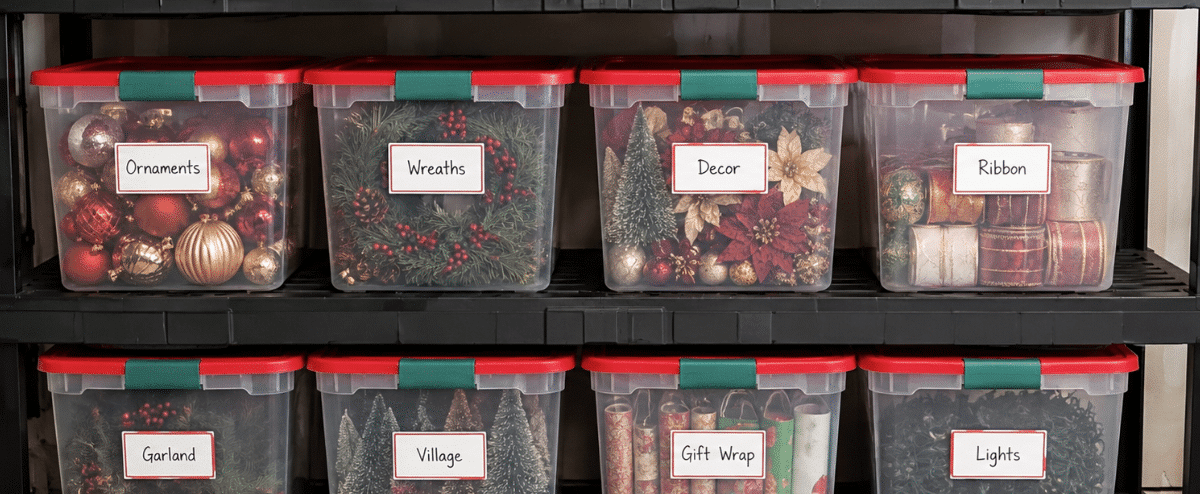
When the holidays are over, sturdy, clearly labeled bins will make next year’s decorating much easier. Choose bins based on what you’re storing and the space where they’ll live rather than buying a whole matching set just because it looks pretty.
Shop holiday and seasonal storage I recommend
23. Gift Wrap
Before buying another roll of wrapping paper because you can’t remember where yours is, gather what you already own.
Put wrapping paper, gift bags, ribbon, tissue paper, tags, and tape together. Toss damaged supplies and organize what’s left in one designated area.
If you only have a few rolls and bags, you probably don’t need a special organizer. But if wrapping supplies are currently spread across three closets and a random drawer, a dedicated gift wrap organizer can make this category much easier to keep together.
24. Guest Room or Guest Space
If guests are staying with you, they don’t need a perfectly styled room. They need somewhere to put their things.
Remove unrelated clutter that has accumulated in the space, clear a nightstand or other surface, and make a little room in a closet or drawer if possible.
Fresh linens, towels, and an accessible outlet will matter more than filling a basket with seventeen miniature toiletries.
25. The Space That Bothers You Most
This one is intentionally different.
Every home has a spot that creates more frustration than it should. Maybe it’s the kitchen island where everything lands. Maybe it’s the hall closet you avoid opening because something might fall on you.
If that space isn’t already on this list, make it number 25.
Organizing before the holidays should make your home easier for you to live in, not just make it look ready for other people.
Before You Buy Organizing Products
You do not need to buy your way into an organized home.
Declutter first. Organize second. Shop last.
Once you know what you’re keeping and where it needs to live, products can absolutely make a system easier to maintain.
That’s when I look for solutions like drawer dividers, clear bins, turntables, shelf dividers, or storage baskets. But I choose them based on the specific problem I’m trying to solve, not because every organized pantry or closet needs the same products.
If you’re looking for ideas, I’ve put together some of the organizing products I recommend for different spaces here:
Shop My Favorite Organizing Products
The product should solve a problem in your space. If it doesn’t, it’s just one more thing you’re going to have to organize later.
Where Should You Start?
You don’t need to tackle all 25 spaces.
Choose three to five that would make the biggest difference in your home before the holidays.
If you’re hosting, start with the spaces your guests will actually use: the entryway, kitchen, bathroom, and guest area.
If you’re not hosting, forget about what anyone else might see. Start with the space that is making everyday life harder for you.
Even one cleared drawer, usable counter, or less crowded closet counts as progress.
Want to keep track as you go?
Download the Free 25 Things to Declutter Before the Holidays Checklist
Print it, put it somewhere you’ll see it, and check off the spaces that matter to you. You don’t have to finish every box for your home to feel better before the holidays.
Need a Little More Help Getting Organized?
If you know what needs to change but you’re not sure how to make your space work better, I can help you create a practical organizing plan that fits your home and the way you actually live.